If you’ve been searching for massage therapy near Pickerington for pain relief, you’ve probably already noticed the problem: most results are booking pages. Pick a time, pick a length, show up. That’s fine for a relaxation treat, but it doesn’t help you figure out which kind of massage actually targets your specific pain, or whether you’re even a good fit for what a given therapist offers. This guide fills that gap, written from the perspective of licensed massage therapists who’ve spent over 15 years doing exactly this work.
Why So Many People in Pickerington Are Turning to Massage for Pain Relief
Pickerington sits right at that commuter sweet spot, close enough to Columbus to draw a lot of desk workers, far enough out to have active families with kids in sports, yard work, and weekend activity on the agenda. The result is a lot of people walking around with chronic, low-grade pain they’ve normalized.
Sit at a desk for eight hours, add a 40-minute drive home, then help coach a soccer practice, and your neck, shoulders, and low back will have opinions about all of it. Over time, that tension doesn’t just go away on its own. It accumulates.
The American Massage Therapy Association has found consistently in its consumer research that pain relief, back, neck, and shoulder pain specifically, ranks as the top reason adults seek massage therapy, ahead of relaxation. That tracks with what we see in practice: most clients coming through the door aren’t looking for a spa day. They want something to actually work.
Massage isn’t a luxury when your back is keeping you awake or your neck is making it hard to check your mirrors while driving. It’s a practical, outcome-driven tool. And when you get the right modality for your specific problem, the results can be meaningful and lasting.
Not All Massage Is the Same: Matching the Modality to Your Pain
This is the part most booking pages skip entirely, and it matters. Choosing the wrong type of massage for your pain isn’t just ineffective, it can leave you frustrated and convinced that massage doesn’t work for you. The technique needs to match the problem.
Deep Tissue Massage Pickerington: When You Need to Get Under the Surface
Deep tissue massage targets the deeper layers of muscle and connective tissue, the myofascial structures where chronic tension actually lives. It uses slower strokes, sustained pressure, and deliberate friction across the grain of the muscle rather than the long, gliding strokes you’d get from a relaxation session.
The difference isn’t just about pressure. As Michele and Kyron at Body Ache Escape explain it, superficial strokes and deep myofascial techniques require entirely different pace, intent, and training. Harder pressure applied the wrong way doesn’t become deep tissue work, it just hurts.
Deep tissue massage is a strong fit when you have:
- Chronic tension that’s been building for months or years
- Restricted range of motion (a shoulder that won’t fully rotate, a neck that won’t turn)
- Post-workout or repetitive-strain soreness that doesn’t resolve on its own
- Massage for back pain Pickerington specifically, deep tissue addresses the layered tension patterns that drive most lower back complaints
Most people need more than one session. Think of it as progress over time, not a single fix.
Swedish, Trigger Point, and Other Therapeutic Options for Pain
Swedish massage uses long, flowing strokes that improve circulation and calm the nervous system. It’s genuinely useful for pain, just a different category of pain. If your aches are stress-driven, systemic, or surface-level, Swedish is often the right call. It’s also a good starting point if you’re new to massage or sensitive to pressure.
Trigger point therapy targets specific points of concentrated muscle tension, the knots that send referred pain somewhere else entirely. Your upper trapezius can generate headaches and eye pain. Your hip flexors can refer pain down the front of the thigh. A client dealing with persistent lower back pain from long desk hours may get more out of a targeted trigger point session than a full-body Swedish: the therapist finds the referral patterns driving the ache instead of working over everything at light pressure.
Other therapeutic tools include:
- Myofascial release, slow, sustained stretching of the connective tissue, useful for chronic tightness and post-injury restrictions
- Sports massage, adapted for active people, combining compression, stretching, and deep work to support recovery and performance
- Prenatal massage, modified positioning and pressure for pregnancy-related back and hip pain
These are different tools for different jobs. A good therapist will ask what’s going on before defaulting to a standard session.
Chronic Pain Massage in Columbus OH: What a Results-Driven Session Actually Looks Like
Booking a therapeutic massage at a place focused on outcomes looks different from booking at a day spa. The session starts before anyone’s on the table.
How a Licensed Therapist Builds a Customized Care Plan
At Body Ache Escape, the intake process is a real conversation. Where is the pain? How long has it been there? What makes it worse, sitting, sleeping, a specific movement? Is it sharp or dull, constant or intermittent? Does it radiate anywhere?
That information shapes everything: which areas get prioritized, what technique gets used in each area, how much pressure is appropriate, and whether certain areas need to be avoided or approached carefully. A therapist might also observe your posture or gait to pick up on patterns that contribute to your pain, ones you might not even notice yourself.
For chronic pain, a single session is rarely the whole answer. A results-driven therapist will often suggest a series, weekly sessions for four to six weeks to break a long-standing tension pattern, then stepping back to monthly maintenance once you’re in a better place. That kind of plan is grounded in how muscle and connective tissue actually respond to treatment, not in upselling.
Body Ache Escape was founded in June 2010 by Michele and Kyron, both licensed massage therapists who built their practice around therapeutic outcomes from the start. Over 15 years in Pickerington, that focus hasn’t changed. This isn’t a spa that added massage. It’s a practice built on making people feel functionally better.
Cupping, Add-Ons, and Complementary Therapies That Boost Pain Relief
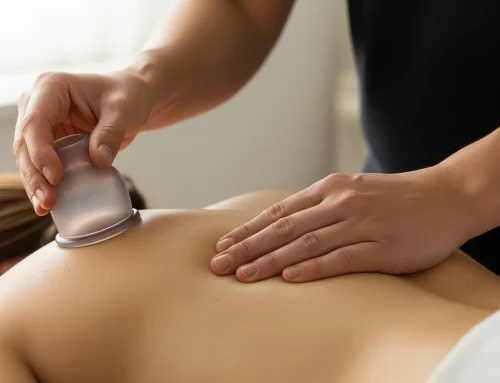
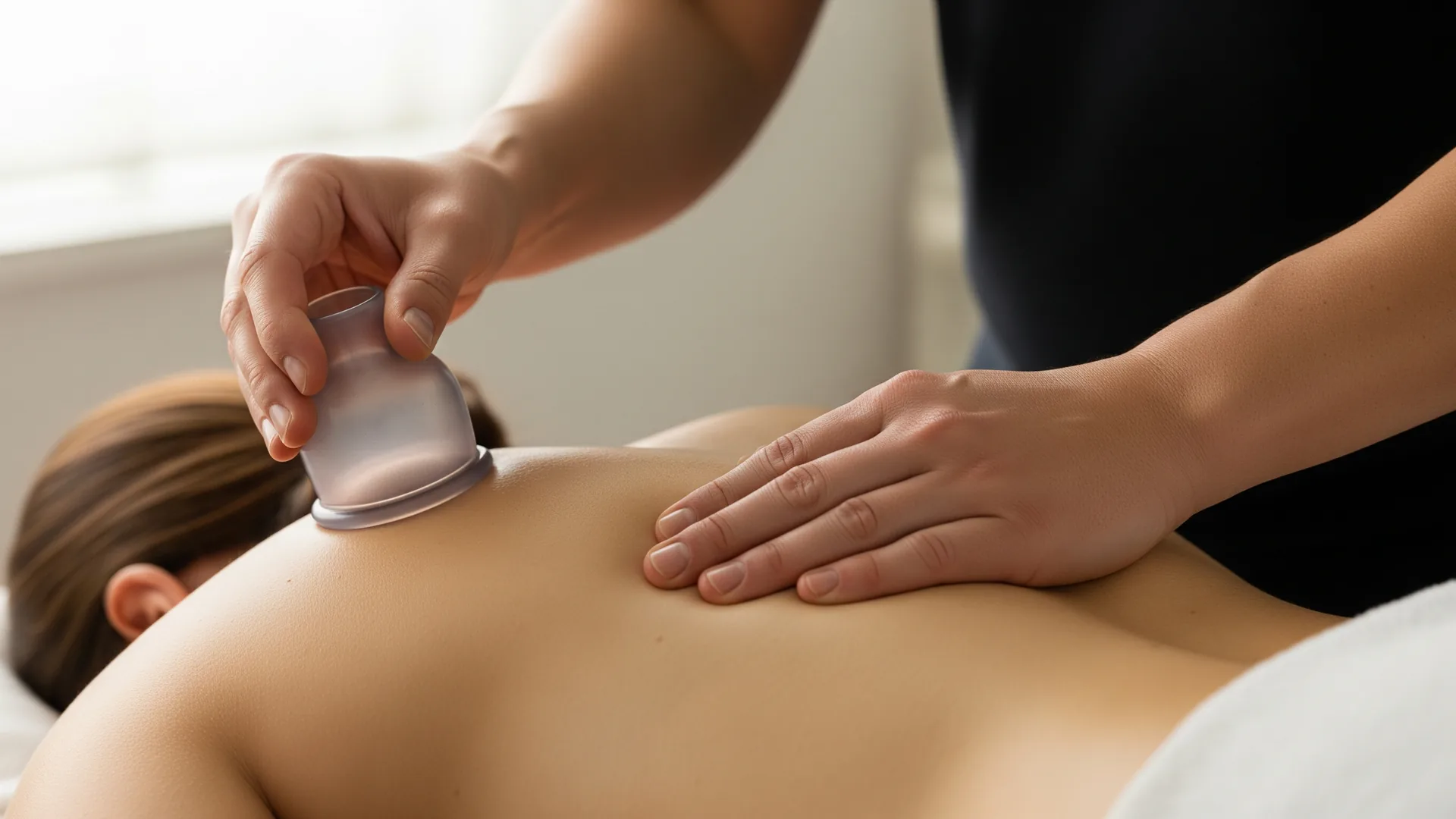
For stubborn or deep-seated pain, cupping massage therapy can work well alongside deep tissue work. Rather than pressing into the tissue, cupping uses suction to lift it, which increases circulation to areas with poor blood flow, releases fascial restrictions, and can reach layers that hands alone have trouble accessing.
People are often surprised by how much relief they feel after a session that includes cupping, especially if they’ve had the same tight spot for years. It’s not a gimmick, and it’s not just for athletes. It works well as an add-on for chronic tension and restricted areas, particularly in the upper back, shoulders, and hips.
If your therapist recommends adding it to your session, it’s worth trying. The marks it leaves are temporary and are not bruises, they’re superficial blood flow changes that fade within a few days.
Finding the Right Massage Therapist Near Reynoldsburg OH and the Pickerington Area
Searching for a pain relief massage near me surfaces a lot of options. Here’s how to tell the difference between a therapist who can actually help your pain and one who’s better suited for relaxation.
Check licensure. In Ohio, massage therapists must be licensed by the State Medical Board of Ohio. An LMT designation (Licensed Massage Therapist) means they’ve completed the required education and passed board exams. Verify at the Ohio Medical Board site if you’re unsure.
Look for therapeutic specialization. Relaxation and therapeutic massage require different training emphasis. If a practice’s website is mostly about ambiance, candles, and couples packages, that’s useful information. If it leads with pain conditions, modalities, and outcome language, that’s a different kind of place.
Ask about intake. If a therapist or practice can’t describe any kind of intake or assessment process, that’s a signal. A therapist treating chronic pain should want to know what’s going on before the session starts.
For people across the Pickerington and Reynoldsburg corridor, proximity matters, you’re more likely to stick with a care plan when the practice is close to home or your commute.
Ready to Feel Better? Book Your Pain Relief Massage at Body Ache Escape
You don’t have to keep pushing through this. If you’ve been managing pain by ignoring it, stretching at your desk, or just hoping it resolves, there’s a better option right here.
The therapeutic massage services at our Pickerington location are built around your specific situation, not a one-size-fits-all session. Michele, Kyron, and the team will ask the right questions, match the right technique to your pain, and work with you on a plan that actually moves the needle.
One practical note: Body Ache Escape accepts HSA and FSA cards for eligible treatments. That means your therapeutic massage can come out of pre-tax dollars, a genuinely useful benefit for clients managing chronic pain, not just a discretionary expense. If you want more detail on how that works, check out the information on using your HSA for massage therapy.
If you’ve never had a therapeutic massage before, that’s fine. The first step is simple: book a session, show up, and tell us what’s going on. We’ll take it from there.