Facial treatment for dark spots is the targeted clinical approach to reducing hyperpigmentation and restoring an even skin tone using techniques like IPL, chemical peels, topical agents, and laser therapy. Hyperpigmentation, the industry term for excess melanin deposits that create dark patches, affects people across all skin tones and ages. Ohio’s four-season climate means sun exposure accumulates year-round, making consistent treatment and prevention equally important. The good news is that clinical evidence now supports several reliable protocols, and combining them correctly produces results that no single treatment can match on its own.
What are the most effective facial treatments for dark spots?
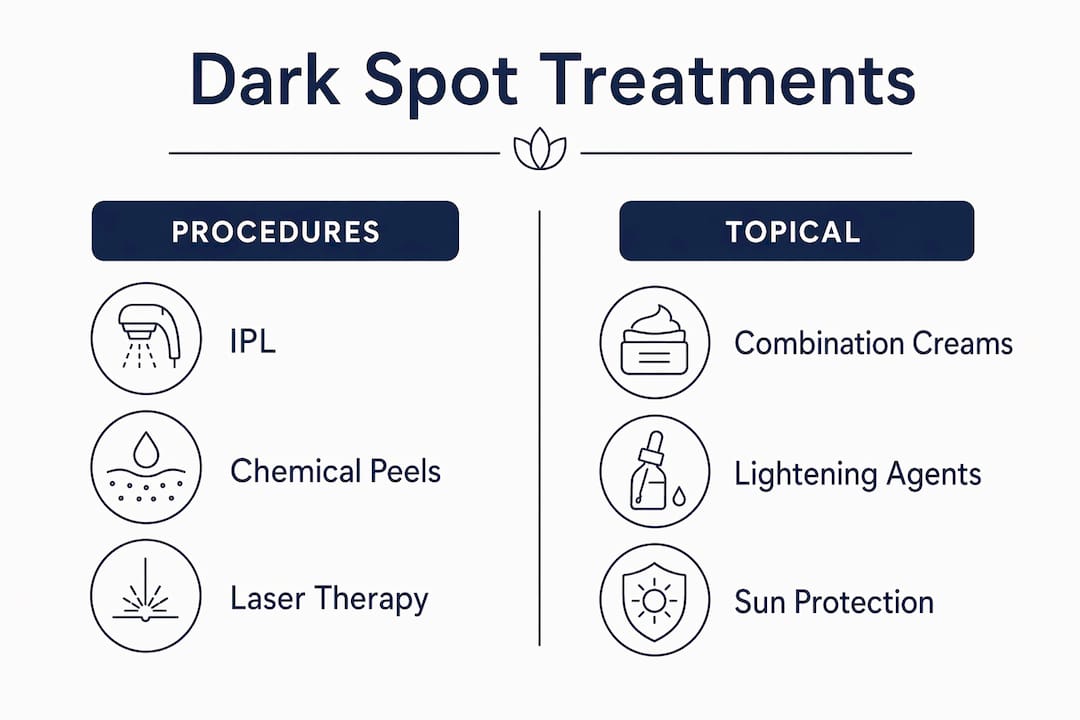
The four main clinical options are IPL, topical combination creams, chemical peels, and laser therapy. Each works differently, suits different skin types, and carries its own timeline.
IPL (intense pulsed light)
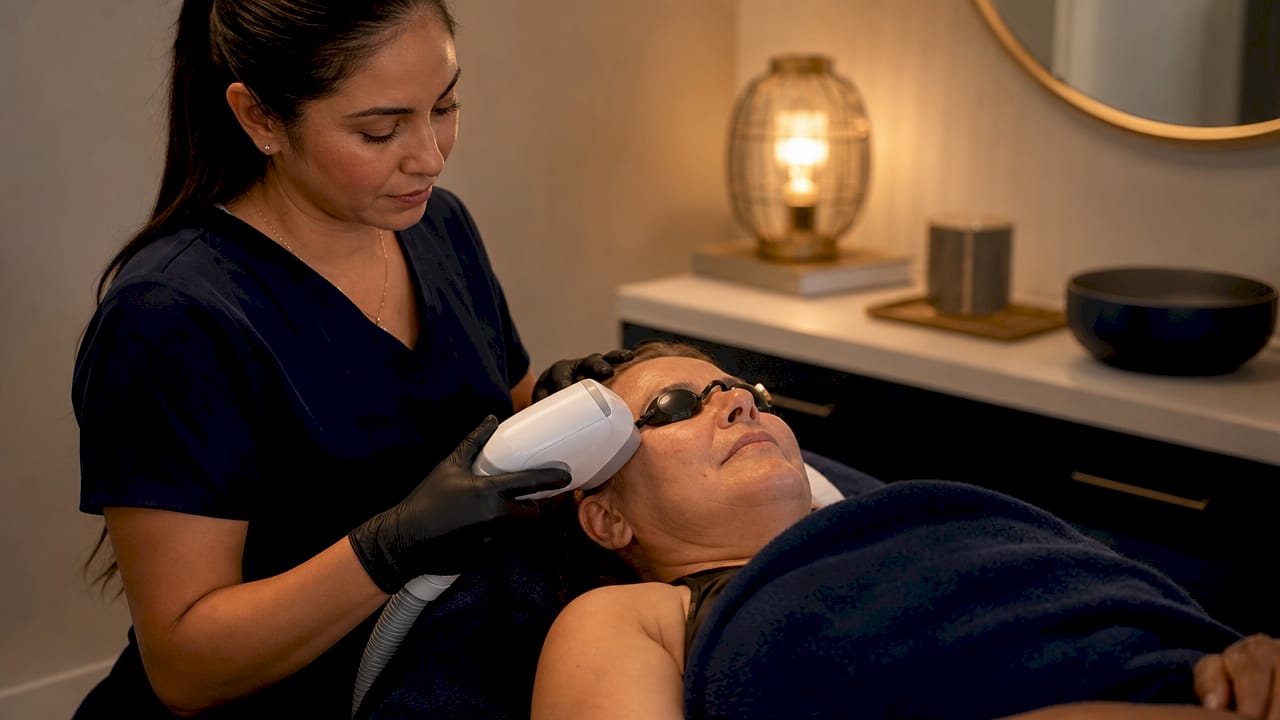
IPL delivers broad-spectrum light pulses that target melanin in the upper layers of skin. Sessions run 20–30 minutes, and most people need 3–4 sessions spaced four weeks apart to see meaningful melanin reduction. That spacing matters because the skin needs time to shed the targeted pigment before the next session begins.
Topical combination creams
For melasma specifically, a triple-combination cream containing hydroquinone 4%, tretinoin 0.05%, and fluocinolone 0.01% clears pigmentation in 77% of patients within eight weeks. That is a strong clinical result for a topical-only approach. These creams work by suppressing melanin production, accelerating cell turnover, and reducing inflammation simultaneously.
Chemical peels
Chemical peels accelerate pigment clearing by increasing epidermal turnover. Glycolic acid peels work well for surface-level sun spots, lactic acid suits sensitive skin, and mandelic acid is gentler still, making it a better fit for darker complexions. A series of peels every 2–4 weeks produces the most consistent fading.
Laser therapy
Lasers offer precision that IPL cannot match, but they carry a higher risk of rebound pigmentation in melasma cases. Lasers are not first-line for melasma because underlying inflammation can cause pigment to return worse than before. They work best for discrete sun spots and age spots on lighter skin tones.
| Treatment | Best for | Downtime | Sessions needed |
|---|---|---|---|
| IPL | Sun spots, Fitzpatrick I–III | Minimal | 3–4 |
| Triple-combination cream | Melasma | None | 8 weeks continuous |
| Chemical peel | Surface pigment, all types | 1–5 days | 4–6 series |
| Laser | Discrete spots, lighter skin | Moderate | 1–3 |
Pro Tip: Combining IPL with topical tranexamic acid (3%) reduces melasma severity by 50.5% after five months, compared to 38.5% with IPL alone. Pairing a procedural treatment with a targeted topical consistently outperforms either approach used in isolation.
How does skin type influence which treatment is right for you?
Skin type is the single most important variable in choosing a dark spot removal solution. Getting this wrong does not just slow results. It can make pigmentation significantly worse.
The Fitzpatrick scale classifies skin into six types based on how it responds to UV exposure. IPL suits Fitzpatrick types I–III, which are lighter skin tones. For Fitzpatrick types IV–VI, IPL and aggressive lasers carry a real risk of post-inflammatory hyperpigmentation (PIH), meaning the treatment itself can create new dark spots.
The type of pigmentation also shapes the protocol:
- Melasma is hormonally driven and often triggered by sun exposure. It rarely responds to procedures alone and almost always requires topical therapy alongside any clinical treatment.
- Post-inflammatory hyperpigmentation (PIH) develops after acne, injury, or irritation. Topical therapy is first-line for PIH, with procedures added only after the skin has been primed and stabilized.
- Sun spots and age spots are the most straightforward to treat. They respond well to IPL and laser when skin tone is appropriate.
Pre-treatment priming with lightening agents like azelaic acid or niacinamide reduces the risk of PIH in darker skin types before any procedure. This step is often skipped at budget clinics, and it is one of the most common reasons treatments go sideways.
Pro Tip: Before booking any procedure, tell your provider your full skin history: past reactions to treatments, any history of keloids, and whether you are prone to PIH. A provider who does not ask these questions before recommending a treatment is a red flag.
What role does sun protection play in treatment outcomes?
Sun protection is not optional. It is the foundation that every other treatment depends on. Without it, UV exposure triggers new melanin production that undoes clinical results within weeks.
Daily SPF is classified as non-negotiable by dermatology guidelines for anyone undergoing hyperpigmentation treatment. Broad-spectrum sunscreen blocks UVA and UVB rays, but visible light also stimulates melanin in darker skin tones. For that reason, formulas containing iron oxide offer better protection for people with Fitzpatrick types III and above.
Failure to use daily sun protection is the most common reason treatment plans fail. That is worth sitting with. You can spend money on IPL sessions or chemical peels and lose all the progress in a single unprotected afternoon outdoors.
A solid daily routine to protect and maintain results includes:
- Apply broad-spectrum SPF 30 or higher every morning, even on cloudy Ohio days
- Reapply every two hours during outdoor activity
- Wear a wide-brim hat when spending extended time outside
- Use a vitamin C serum in the morning to neutralize free radical damage
- Apply a retinoid or niacinamide at night to support cell turnover and pigment suppression
- Avoid picking at skin or using harsh scrubs that create micro-inflammation
Knowing how to protect skin after sun exposure is just as important as prevention. Sunburn triggers inflammation, and inflammation is a direct driver of post-inflammatory hyperpigmentation.
What should you realistically expect from the treatment process?
Setting realistic expectations before starting any protocol saves a lot of frustration. Pigmentation does not disappear overnight, and the process has predictable stages.
A typical IPL course follows this sequence:
- Consultation and skin assessment. Your provider evaluates skin type, pigmentation type, and medical history before recommending a protocol.
- Pre-treatment priming (2–4 weeks). Lightening agents prepare the skin and reduce procedural risk, especially for darker skin tones.
- First IPL or peel session. The treatment itself takes 20–30 minutes for IPL. You may feel mild warmth or snapping sensations.
- The peppering effect (days 3–7). Dark spots temporarily darken and crust. This is a normal sign of pigment shedding. The peppering effect lasts 3–7 days and indicates the treatment is working.
- Pigment flaking and fading (weeks 1–4). Crusted spots flake off naturally, revealing lighter skin beneath. Do not pick at them.
- Repeat sessions. Most people complete 3–4 IPL sessions or a series of 4–6 peels, spaced several weeks apart.
- Maintenance phase. After the initial course, quarterly touch-up sessions and daily SPF maintain results long-term.
Side effects are generally mild: temporary redness, sensitivity, and the peppering effect described above. More aggressive treatments like deeper peels or laser carry a longer recovery window of several days to a week. Melasma, in particular, requires combination topical therapies alongside procedures to prevent recurrence, since procedures alone rarely produce lasting results for this condition.
Key Takeaways
The most effective approach to facial treatment for dark spots combines a procedure matched to your skin type with daily broad-spectrum SPF and a targeted topical agent.
| Point | Details |
|---|---|
| Match treatment to skin type | IPL suits Fitzpatrick I–III; darker tones need gentler protocols and pre-treatment priming. |
| Combine for better results | IPL plus topical tranexamic acid outperforms IPL alone by a significant margin. |
| Sun protection is non-negotiable | Skipping daily SPF is the leading reason hyperpigmentation treatments fail. |
| Expect a peppering phase | Temporary darkening of spots post-treatment is normal and signals the treatment is working. |
| Melasma needs ongoing management | Procedures alone rarely cure melasma; topical therapy and maintenance are required long-term. |
What I have learned after years of watching clients chase dark spots
Clients come in frustrated. They have tried serums, home peels, and expensive creams, and the spots are still there. What I have noticed, consistently, is that the problem is almost never the treatment itself. It is the sequence.
People skip the priming phase because they want results fast. They book an IPL session without preparing their skin, and then wonder why they are dealing with new pigmentation a month later. The skin needs to be stable before you introduce any aggressive procedure. That means weeks of topical lightening agents, strict SPF, and no active inflammation.
The other pattern I see is people treating melasma the same way they treat sun spots. These are completely different conditions with different drivers. Melasma is hormonal and chronic. You manage it. You do not cure it with three IPL sessions. The clients who get the best long-term results are the ones who accept that reality and commit to a maintenance routine rather than chasing a one-time fix.
My honest advice: work with a provider who takes the time to assess your specific pigmentation type and skin tone before recommending anything. A personalized plan, even if it starts slower, will always outperform a generic protocol. Patience and consistency are the two things no treatment can replace.
— Michele
Skin care and facial treatments at Bodyacheescape in Pickerington
If you are ready to move from researching to actually doing something about your dark spots, Bodyacheescape in Pickerington offers personalized facial treatments designed around your skin, not a one-size-fits-all menu.
The team at Bodyacheescape takes the time to understand your skin type, pigmentation history, and goals before recommending any treatment. With over 15 years of serving the Ohio community, the clinic has built a reputation for thoughtful, individualized care that produces real results. Whether you are starting with a clarifying facial or looking for a more targeted approach to uneven skin tone, the facial and skin services at Bodyacheescape are a practical next step. Book a consultation and get a clear plan built around your skin.
FAQ
What is the best facial treatment for dark spots?
The best treatment depends on your skin type and pigmentation cause. IPL works well for sun spots on lighter skin tones, while topical triple-combination creams are highly effective for melasma across a broader range of skin types.
How long does it take to see results from dark spot treatments?
Most people see visible improvement after 4–8 weeks of consistent topical treatment or after completing a series of 3–4 IPL sessions spaced four weeks apart.
Can dark spots come back after treatment?
Yes, especially with melasma. Without daily broad-spectrum SPF and ongoing topical maintenance, UV exposure and hormonal triggers can cause pigmentation to return.
Is IPL safe for darker skin tones?
IPL carries a risk of post-inflammatory hyperpigmentation for Fitzpatrick types IV–VI. Gentler alternatives and pre-treatment priming with lightening agents are recommended for darker skin tones before any procedure.
Do natural remedies work for dark spots?
Natural ingredients like niacinamide, vitamin C, and azelaic acid support pigment suppression and work well as maintenance tools. They are most effective when used alongside professional treatments rather than as standalone dark spot removal solutions.