That tight feeling along the side of your neck deserves more than another hard stretch. Meet your SCM muscle, understand what symptoms can mean, and learn where gentle care and massage may fit.

Not a wrestling match.
THE SHORT ANSWER · TL;DR
Sternocleidomastoid pain refers to discomfort involving the SCM, a paired muscle along the front and sides of your neck. It can be associated with tenderness, stiffness, and referred pain. Symptoms alone cannot identify the cause. Gentle movement and comfortable positioning may help everyday neck tension; massage can be a supportive option after checking that it is appropriate. Avoid digging into the front of your neck.
What is the sternocleidomastoid muscle?
The sternocleidomastoid, usually shortened to SCM, runs on each side from the breastbone and collarbone to the bony area behind the ear. It helps turn and tilt your head and supports the neck. It also assists breathing. See Cleveland Clinic’s SCM anatomy guide.
Think about looking over your shoulder before changing lanes or turning toward someone who says your name. Your neck muscles work together to make those ordinary movements possible. Knowing one muscle’s name can make a conversation about discomfort easier, but it does not tell the whole story.
What can SCM muscle pain feel like?
SCM-related problems may involve local aching, tenderness, or difficulty turning and tilting the head. Some pain can be felt elsewhere, such as the head or face. This is called referred pain. These patterns overlap with other conditions, so a symptom checklist cannot confirm that the SCM is responsible.
What about headaches, ear pain, or dizziness?
These symptoms sometimes appear in discussions of SCM-related pain, but each has other possible causes. New hearing loss, vision changes, significant dizziness, or a new or unusual headache should be medically assessed rather than treated as a neck knot. A massage appointment is not a diagnostic test.
When describing your symptoms, separate what you feel from what you think is causing it. “My right neck aches when I turn, and I have a new headache” gives a healthcare professional much more to work with than “My SCM needs releasing.”
Why might the side of your neck feel tight?
Everyday neck strain can follow prolonged desk work, an uncomfortable sleeping position, or an awkward movement. Injury can also be a factor. MedlinePlus explains common causes of neck pain. None of these possibilities proves that one particular muscle is the source.
Before buying another pillow or blaming your posture, look for a pattern. Does discomfort build during computer work? Is it present when you wake up? Did it begin after an accident? Did you recently change your exercise routine? Bring those details to your appointment.
| Notice | A useful detail to share |
|---|---|
| Timing | “It starts halfway through my workday” or “It began suddenly yesterday.” |
| Movement | “Turning right bothers me, but looking down does not.” Do not force a movement to test it. |
| Other symptoms | Mention headaches, dizziness, tingling, recent illness, or a neck lump. These can change which kind of care is appropriate. |
| Response | “A short walk feels better” or “Stretching made it worse.” Both are useful information. |
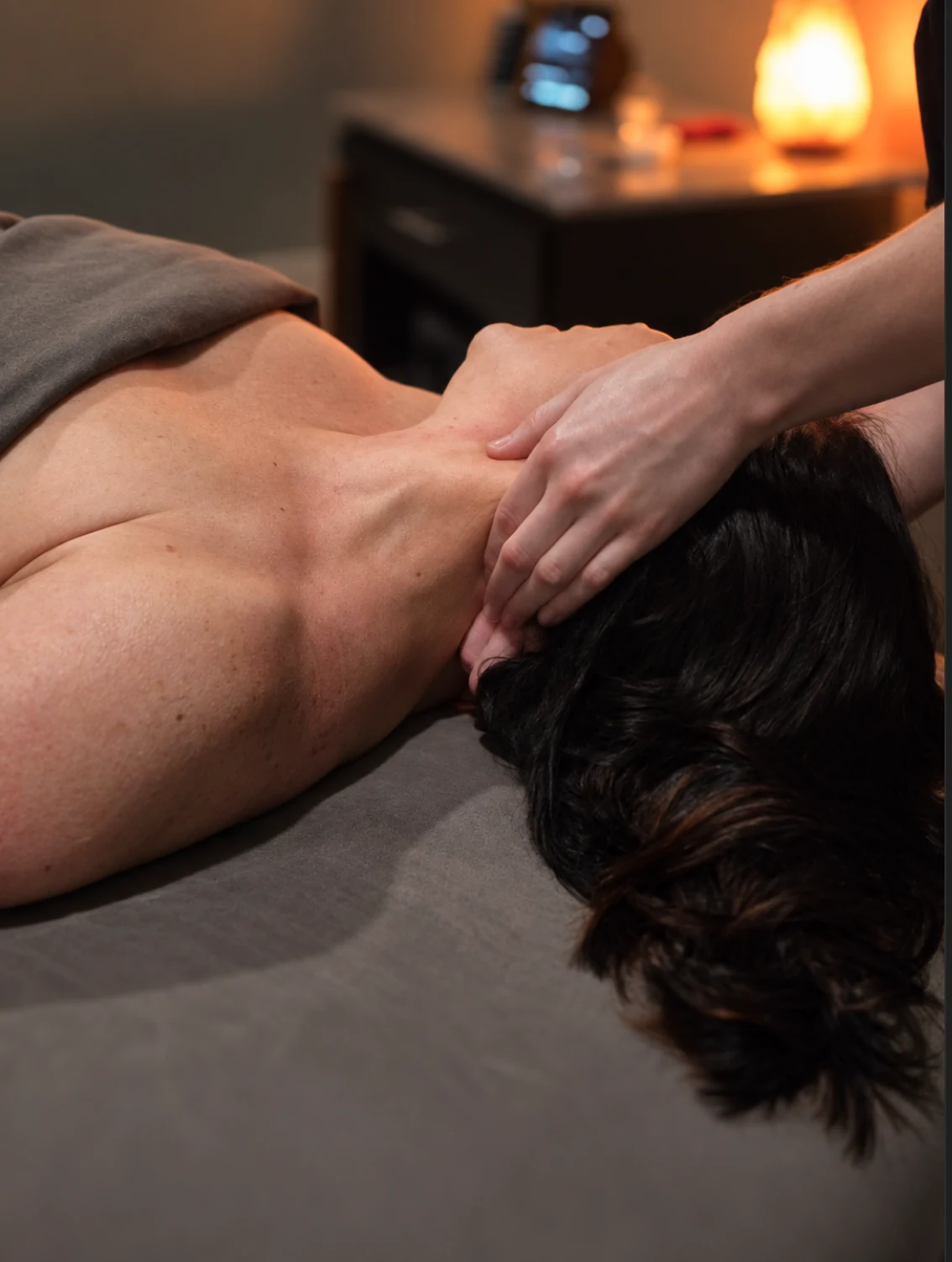
Can massage help sternocleidomastoid pain?
Massage may be an option for muscular discomfort, but it cannot establish the cause of your symptoms or promise to fix a specific muscle. NCCIH reports possible short-term benefits for neck and shoulder pain. Results vary, and the evidence is limited.
A 2024 Cochrane review found that massage may make little or no difference compared with sham massage for subacute or persistent neck pain near 12 weeks. Confidence in the findings was low. This research concerned neck pain broadly, not a proven SCM-specific cure.
What about SCM trigger points?
People often use “trigger point” to describe a sensitive area of muscle, sometimes with pain felt elsewhere. That label is not a reason to keep pressing until something gives. Our guide to trigger points and muscle knots explains the broader topic. Tell your therapist what you feel rather than trying to identify or treat a point yourself.
Your preference matters. You can ask for lighter work, a different position, less conversation, or an area to be skipped. If the work brings on dizziness, nausea, sharp pain, tingling, or a headache, say so immediately and stop that technique. New or persistent symptoms need appropriate assessment.
Gentle self-care for a tight neck
For uncomplicated neck discomfort, NHS guidance supports keeping the neck moving, avoiding long periods in one position, and trying heat or cold. If symptoms followed an injury or include the warning signs below, get advice before starting exercises.
Should you stretch the SCM directly?
There is no single stretch that suits every sore neck. A physical therapist can help choose movements for your situation, particularly if discomfort keeps returning. Stop exercises that worsen symptoms or cause dizziness, tingling, or headache.
Warmth, cold, and sleep support
A wrapped warm or cold pack may feel soothing. Protect your skin, follow the product instructions, and do not sleep with a pack in place. At night, look for comfortable support that keeps your head in line with your body rather than sharply bent to one side.
Skip aggressive self-massage at the front of the neck
The SCM sits near important blood vessels, nerves, and other sensitive structures. Avoid deep probing, hard tools, or massage guns along the front and sides of your neck. If you want hands-on guidance, ask a qualified professional rather than copying a forceful “release” video.
When neck pain needs medical attention
Get urgent help for neck pain with trouble breathing, stroke-like symptoms, or a sudden severe headache. Fever with a very stiff neck and headache also needs immediate assessment. Symptoms after a significant fall, collision, or other injury should not be worked on before evaluation.
Contact a healthcare professional for arm weakness or numbness, trouble swallowing, a neck lump, worsening pain, or symptoms that persist despite self-care. New dizziness, hearing changes, or visual symptoms also deserve assessment. MedlinePlus lists additional reasons to seek care. If you are unsure where to start, call your medical provider.

Booking a neck-focused massage in Pickerington
You do not need to know how to pronounce sternocleidomastoid to ask for help. At Body Ache Escape Wellness Center, start with your concerns and pressure preferences. Our therapeutic massage menu explains the available appointment options.
- Share the story. Tell us where you feel discomfort, when it began, and whether you have had medical advice. Include relevant conditions, medications, recent procedures, and injuries.
- Choose a realistic focus. A 60-minute appointment can be a starting point for your main concern. Consider 90 minutes if you want time for several areas as well. Appointment length does not guarantee a particular result.
- Set the boundaries. Discuss pressure, positioning, and any area you do not want touched. Direct SCM work is not required for every neck-focused session.
- Notice what changes. Afterward, keep track of comfort and everyday movement. If symptoms persist, worsen, or change, seek medical advice rather than simply booking increasingly intense work.
Read what to expect at your first visit. If stress and shoulder tension are part of your experience, our massage for stress relief guide offers more context.
Questions about SCM muscle pain
Where is the SCM muscle?
There is one on each side of your neck, running from the breastbone and collarbone toward the bone behind your ear. It helps with head movement and neck support.
How do I know if my SCM is causing the pain?
You cannot confirm the source from location alone. Describe your symptoms to a healthcare professional, especially if pain is new, persistent, or accompanied by other changes.
Can SCM tension cause headaches?
Muscular pain can sometimes be felt away from its source, including around the head. But headaches have many causes. A new, severe, or unusual headache needs assessment rather than an assumption that massage will resolve it.
Should I massage a painful lump in my neck?
No. A lump is not automatically a muscle knot. Have an unexplained lump checked by a healthcare professional before applying pressure.
How long does SCM pain take to improve?
There is no dependable timeline without knowing the cause. Avoid anyone promising a one-session release or a fixed recovery period. Persistent or worsening symptoms are a reason to seek medical advice.
Do I need deep tissue massage for neck tension?
No. Discuss a comfortable approach with your therapist. Stronger pressure is not automatically a better choice, particularly around the front of the neck.
Care that starts
with listening.
Talk with us about a massage built around your comfort and goals at Body Ache Escape Wellness Center, 180 Postage Cir, Suite 100, Pickerington, Ohio.
Need help choosing? Call (614) 604-6358.
Sources & further reading
This educational guide does not diagnose neck pain or replace individualized healthcare advice.