You typed “sports massage near me” into Google. Now you’re staring at a dozen places, all with 4.8 stars and glowing reviews. So how do you actually pick one?
Here’s the problem: a high star rating tells you people liked their experience. It doesn’t tell you whether the therapist knows how to work with a strained hamstring, an overloaded IT band, or a shoulder that’s been barking since marathon training started.
Finding good reviews for a sports massage therapist takes a different kind of reading than finding a good restaurant. You need to know what to look for. Just as important, you need to know what to ignore.
Why “Good Reviews” Alone Won’t Tell You Who’s Actually Good
Most review platforms lump every kind of massage into one bucket. A spa that does hot stone facials and a clinic that treats runners with recurring calf tightness can both show up with the same star rating. That rating measures satisfaction, not clinical skill.
People leave five stars for a lot of reasons that have nothing to do with sports massage expertise. The room smelled nice. The receptionist was friendly. The lighting was calming. Those things matter for a relaxing afternoon. They don’t matter much if you’re trying to get back to running, lifting, or playing without pain.
The Difference Between a Relaxing Massage and a Sports Massage Review
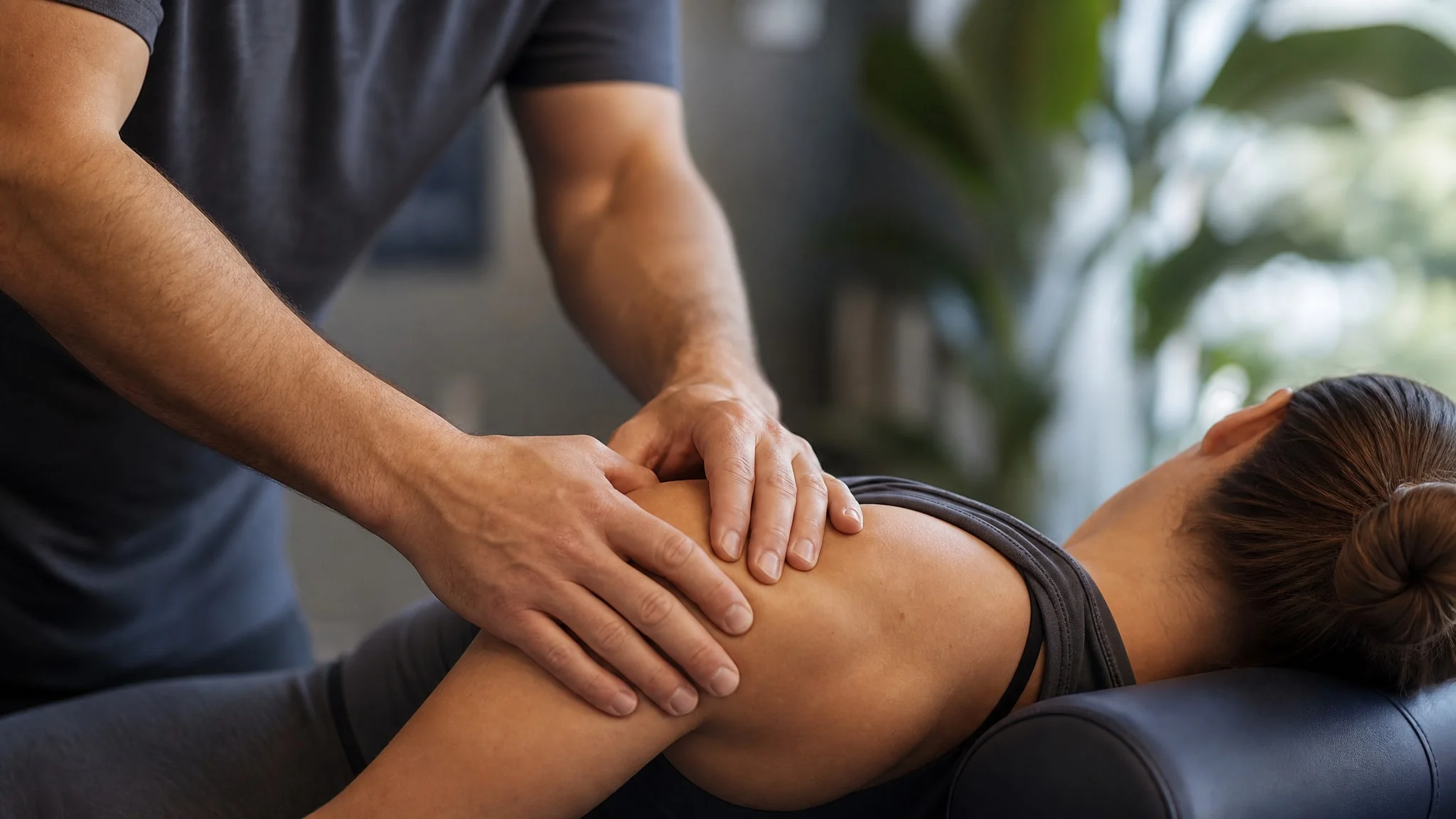
A relaxing massage review usually talks about how the person felt afterward: calm, sleepy, “like a new person.” A useful sports massage review talks about outcomes tied to movement. Did the therapist find the actual source of the tightness? Did the client notice less pain during a run or workout afterward? Did the therapist explain what was going on and offer follow-up guidance?
If a review only mentions ambiance, treat it as a data point about comfort, not competence. If it mentions a specific injury, movement pattern, or recovery result, that’s a much stronger signal.
What to Actually Look for When You Search for Sports Massage Near Me
Once you understand the limits of star ratings, you can filter smarter. A few concrete things separate a spa-style listing from a provider who actually treats athletic and repetitive-strain issues.
Credentials and Licensing to Check Before You Book
Start with licensing. A licensed massage therapist has completed accredited training and passed state requirements. That’s a baseline you should never skip. Beyond that, look for mentions of continuing education in sports massage, orthopedic massage, or deep tissue work specifically. Many states publish license lookup tools through their board of massage therapy. It’s worth a quick check if you’re unsure.
Credentials alone don’t guarantee a great fit. But they rule out therapists working outside their training, and that matters more when you’re dealing with an actual injury instead of general stress.
Reading Between the Lines of Review Text
Skim past the star count and read the actual text of ten or so reviews. Look for specific modality names: deep tissue, myofascial release, cupping, trigger point work. If you see clients comparing techniques, you can get a feel for how those approaches differ by reading about cupping versus deep tissue massage before you book.
Check the dates too. A business with fifty five-star reviews from three years ago and nothing recent may have changed staff or quality since then. Recent reviews, especially ones written in the last few months, tell you more about what to expect today.
Also notice how the business responds to reviews, especially critical ones. A thoughtful, specific response to a complaint says more about professionalism than a wall of unanswered five-star praise.
Red Flags in Online Reviews That Signal a Spa, Not a Sports Massage Provider
Some patterns in reviews are worth treating as warning signs if you’re specifically looking for sports massage:
- Every review mentions the robe, the music, or the lavender oil, and nothing else.
- No reviews mention injuries, athletic training, or recovery from a specific activity.
- Reviews are short and generic, “great massage, will come back”, with no detail about technique or results.
- The business’s photos and descriptions emphasize relaxation packages, couples massage, or facials rather than therapeutic work.
- There’s no mention anywhere of licensed therapists, treatment plans, or assessment before the massage begins.
None of these things make a place bad. They just tell you it’s built for relaxation, not for treating a hip that’s been tight since you added hill repeats to your training. If you’re a runner dealing with recurring soreness, it also helps to understand how massage helps runners avoid injury before you decide what kind of session you actually need.
Questions to Ask Before Your First Appointment
Reviews get you a shortlist. A short phone call or intake conversation tells you the rest. Before booking, ask the front desk or therapist a few direct questions:
- How much experience does the therapist have working with athletes or active clients?
- Do they build a treatment plan, or is every session the same routine regardless of what you say?
- What modalities do they use for sports-related tightness or injury recovery?
- Will they ask about your training schedule, sport, or specific pain points before starting?
A confident, specific answer is a good sign. A vague “we do all kinds of massage here” isn’t disqualifying, but it means you’ll want to lean harder on the intake conversation itself.
What to Expect During Intake at a Results-Focused Studio
A licensed massage therapist can usually tell within the first few minutes of intake whether tightness is muscular, joint-related, or nerve-related. That’s why a real conversation before the table even comes out matters more than a star rating alone.
At a results-focused studio, intake isn’t a formality. Expect questions about your activity level, when the pain started, whether it changes with movement, and what you’ve already tried. That conversation shapes the session instead of following a generic script. If you want a fuller walkthrough of what that first visit typically involves, what to expect at your first appointment covers it in detail.
Local Spotlight: Finding Sports Massage in Pickerington, Columbus, and Reynoldsburg
If you’re searching from Columbus, Pickerington, Reynoldsburg, or Canal Winchester, proximity matters. But it shouldn’t be the only filter. A five-minute drive to a spa that can’t address your calf strain isn’t actually convenient.
Runners and weekend athletes in Pickerington, Reynoldsburg, and Canal Winchester often come in after a new training block flares up hip or calf tightness. What they’re looking for is a therapist who understands sport-specific loading, not just general relaxation. That’s a different search than “massage near me.” It’s closer to “massage therapist who’s treated this exact problem before.”
The strongest approach combines three filters at once: someone close enough to visit regularly, reviews that mention real outcomes, and verifiable credentials. Any one of those alone leaves gaps. For more on how residents in the area weigh those factors, why locals choose Body Ache Escape walks through it from the community’s perspective. If you’re a bit further out, there’s also coverage of therapeutic massage options near Pataskala for readers outside the core service area. And if your search for “sports massage” is really about a nagging, non-sport-related ache, it’s worth reading about massage for chronic back pain in Columbus instead, since that’s a related but different problem.
How Body Ache Escape Approaches Sports Massage Differently
Michele and Kyron, both licensed massage therapists, founded Body Ache Escape in June 2010. They built the practice around measurable pain relief rather than spa ambiance. That’s the same standard this guide is asking you to hold every provider to: does the work actually change how you feel and move, not just how relaxed you feel for an hour.
Sessions here start with a real conversation about what’s tight, what’s sore, and what you’re training for or recovering from. That intake shapes the treatment plan instead of running everyone through the same routine.
Cost is often a real barrier to getting consistent care, so it’s worth knowing that sessions are HSA/FSA eligible for qualifying treatments. Many clients put pre-tax wellness dollars toward ongoing sports massage care instead of paying fully out of pocket every time. If you’re not sure whether your plan qualifies, check with your HSA or FSA administrator before your appointment.
If you’re in Columbus, Pickerington, Reynoldsburg, or Canal Winchester and tired of guessing based on star ratings alone, you don’t have to keep sorting through vague five-star reviews to find someone who actually treats athletic pain. Reach out to Body Ache Escape, ask the questions above, and book a session with a team that treats results as the whole point.