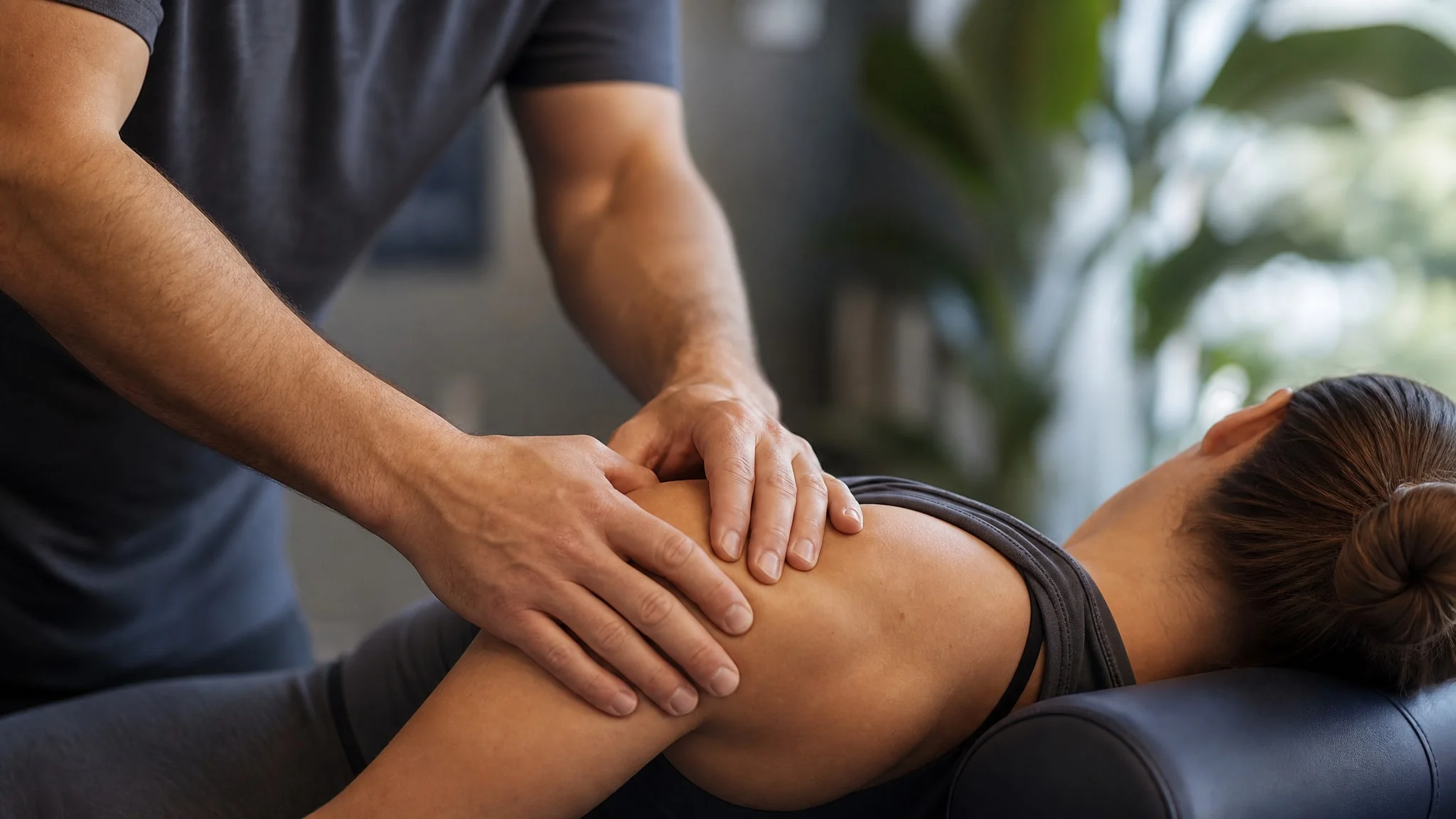
If you’re dealing with a herniated disc, you’ve probably wondered whether massage will help or make things worse. That’s a fair question. Massage isn’t going to fix a herniated disc on its own. But used the right way, at the right time, it can ease the muscle tension and guarding that build up around it. That alone can make daily life a lot more bearable.
Can You Get a Massage for a Herniated Disc Safely?
Yes, in most cases. The key word is “most.” Massage for a herniated disc is generally safe when a therapist knows what they’re working with and adjusts accordingly. It’s not safe when it’s treated like a generic relaxation rubdown on a back that needs a careful, informed touch.
What a herniated disc actually is
Your spine is stacked with vertebrae, cushioned by discs that act like shock absorbers. A disc herniates when its soft inner material pushes through a crack in the tougher outer layer. That bulge can press on nearby nerves. That’s what causes the sharp, radiating pain many people feel down the leg or arm.
Lumbar disc herniation is one of the most common causes of low back pain and radiating leg pain in adults. The good news: most cases improve over weeks to months with conservative, non-surgical care rather than surgery.
When massage helps vs. when it’s risky
Massage tends to help when the goal is calming the muscles around the disc, not treating the disc itself. Muscles near an irritated disc often tighten up defensively. That adds a whole second layer of pain on top of the original injury. Easing that guarding is where massage earns its place.
It becomes risky when someone with active red-flag symptoms skips a medical evaluation and heads straight to bodywork. If you’re experiencing numbness, spreading tingling, or worsening leg weakness, see a doctor before booking a massage. Those symptoms can signal nerve compression serious enough to need imaging or a specialist. A massage table isn’t the place to find that out.
Best Massage Techniques for Herniated Disc Pain Relief
Not all massage is created equal, and that matters a lot here. The right technique depends on where you are in the healing process.
Gentle vs. deep tissue approaches
Early on, especially during a flare-up, lighter, more targeted work usually beats deep tissue massage. Licensed massage therapists generally recommend avoiding deep, aggressive pressure directly over an acutely inflamed disc area. Instead, they favor gentle techniques that ease the surrounding muscle guarding and support better circulation.
As pain settles and the disc calms down, technique can shift. A therapist may introduce firmer, more focused work on chronically tight muscle groups (the low back, glutes, and hips are common culprits) once acute inflammation isn’t the main issue anymore. This is where trigger point therapy and myofascial work come in. They target the knots and tight bands that keep referring pain outward even after the initial injury has started to heal.
Working with sciatica and radiating leg pain
A lot of people ask specifically about sciatica, since a herniated disc is one of the more common reasons a nerve gets irritated enough to cause it. Massage can genuinely help here, but not by attacking the nerve pain directly. Instead, a therapist works on the muscles that tend to compress or irritate the sciatic nerve, like the piriformis and other deep hip rotators.
Loosening those muscles can take pressure off the nerve pathway and reduce how far the pain radiates. It’s slower, more deliberate work than a typical leg massage. It should never involve deep digging directly into an area that’s already shooting with pain.
What to Avoid During a Massage for a Herniated Disc
Some techniques and positions can aggravate an already irritated disc. A few things worth avoiding, or at least discussing carefully with your therapist first:
- Direct deep pressure on the spine itself. The muscles beside the spine can usually tolerate work; the disc and vertebrae should not be a pressure point.
- Aggressive stretching or forced range of motion. Gentle mobility is fine. Forcing a stretch past what feels comfortable can reinjure an already compromised disc.
- Prone (face-down) positioning that increases pain. Lying flat on your stomach extends the low back, which some people with disc issues find worse, not better. A good therapist will adjust your position, use extra bolstering, or work with you side-lying if prone positioning isn’t comfortable.
- High-intensity deep tissue work early in a flare-up. Save the deeper work for once the acute inflammation has settled.
If a technique makes your leg pain sharper or spreads numbness, speak up immediately. A herniated disc massage session should never leave you in more pain than when you walked in.
What to Expect at Your First Session
Your first visit shouldn’t jump straight to hands-on work. It should start with a conversation.
Intake and communication with your therapist
Expect questions about when your pain started, whether you’ve had imaging done, and what makes it better or worse. Tell your therapist your diagnosis, or even just your symptoms if you haven’t been formally diagnosed. That gives them what they need to plan pressure and technique in real time.
A client with a lumbar disc bulge who feels sharp, shooting leg pain needs a very different approach than someone with mostly localized low-back stiffness. That’s exactly why this intake conversation matters so much before any pressure gets applied.
Many first-time clients come in unsure whether massage is even safe for their herniated disc. Walking them through what to expect, and what to avoid, is part of every initial consultation at Body Ache Escape. If you’d like a broader walkthrough of how a first visit typically goes, what to expect at your first massage appointment covers the general process step by step.
At Body Ache Escape, our licensed therapists routinely work with clients managing disc-related back and leg pain. We tailor pressure and technique around each person’s diagnosis and pain pattern instead of running a one-size-fits-all routine.
Building a Routine: How Often to Get Massage for Disc Pain
During an active flare-up, more frequent, gentler sessions, often weekly, tend to work best for keeping muscle guarding from building back up between visits. As pain stabilizes, many clients shift to a maintenance rhythm every two to four weeks. That’s usually enough to keep tight muscles from taking over again.
Massage works best as one piece of a broader routine, not a standalone fix. Pairing it with stretching, physical therapy, and heat therapy tends to produce better, longer-lasting results than massage alone. Infrared heat in particular can help relax tight muscles before or after a session, and infrared sauna benefits for muscle pain is worth a look if you’re building out that kind of routine.
If your disc pain has become more of a long-term, chronic pattern rather than an acute flare, our guide to massage for chronic back pain goes deeper into pacing and technique for that stage. And if you’re weighing massage against other modalities, how cupping compares to deep tissue massage can help you figure out what fits your situation.
Massage for a Herniated Disc in Pickerington, Reynoldsburg & Columbus
We see a lot of disc-related back and leg pain come through the door, and it makes sense. Sitting for long stretches, repetitive lifting, and everyday wear and tear all add up over time, whether you’re coming from Columbus, Reynoldsburg, Canal Winchester, or here in Pickerington.
If you’re nearby, therapeutic massage options in Canal Winchester and Pickerington can give you a sense of what’s available close to home. And if you want to explore our full range of pain-relief services, our Pickerington wellness center for pain relief is a good starting point.
Many therapeutic massage sessions also qualify for HSA or FSA reimbursement when they address a diagnosed condition like a herniated disc. It’s worth checking with your plan and asking us for documentation if you go that route.
You don’t have to keep guessing which approach is safe, or keep pushing through pain that’s only getting louder. Book a personalized assessment with us, and we’ll build a care plan around your actual diagnosis and pain pattern, not a generic routine.