If you live with scoliosis, you already know the pain isn’t evenly spread. One side of your back works overtime. The other side feels stretched thin and weak. Regular massage, the kind built for relaxation instead of asymmetry, often misses the point entirely.
Massage for scoliosis is a different approach. It’s not a generic full-body rubdown. It’s about finding where your specific curve is pulling muscle, then working that pattern with the right pressure and technique.
What Scoliosis Does to the Body, and Why Massage Can Help
Scoliosis is a sideways curve in the spine, and it rarely stays in one simple shape. Curves can look like a C or an S. They can sit in the thoracic (mid-back) area, the lumbar (low back) area, or both.
That sideways curve doesn’t just affect bone. It changes how your muscles work every day.
How the Spinal Curve Creates Muscle Imbalance
When the spine curves, muscles on the concave side, the inside of the curve, get compressed and often shorten over time. Muscles on the convex side, the outside, get stretched and end up doing too much work to hold you upright.
That’s why people with scoliosis often describe the pain as lopsided. One side aches from constant tightness. The other side aches from overworking.
Over months and years, this imbalance can build compensatory tightness in the shoulders, hips, and even the neck. The body keeps hunting for balance wherever it can find it. That’s exactly why a generic relaxation massage, the kind that treats both sides of the back the same, can leave scoliosis pain untouched. At worst, it can leave the overworked side feeling even more overworked afterward.
Is Massage for Scoliosis Safe? What Research and Clinicians Say
Let’s address the big question directly: massage cannot fix or reduce the actual curve of the spine. Scoliosis is a structural issue involving bone growth and alignment. No amount of soft-tissue work changes that structure.
What massage can do is real, and it matters. It can ease the muscle-related pain, stiffness, and compensatory tension that come with living with a curved spine. For a lot of people, that muscular pain is the part that actually disrupts daily life, not the curve measurement itself.
Safety depends on the severity of the curve and any surgical history. Licensed massage therapists generally recommend clearing moderate-to-severe curves, or post-surgical spines, with a physician before starting regular bodywork. Positioning and pressure need to be adjusted case by case. If you’ve had spinal fusion surgery, your therapist needs to know exactly where the hardware sits and which movements or pressure points to avoid near the fusion site.
For mild curves without surgical history, massage is generally considered safe. It can be a meaningful part of managing day-to-day discomfort. The Scoliosis Research Society and other clinical groups say soft-tissue therapies work best as a complement to medical monitoring, not a replacement for it.
Best Massage Techniques for Scoliosis Pain Relief
Not all massage styles are built for asymmetrical pain. Some techniques suit the uneven tension scoliosis creates far better than others.
Deep Tissue vs. Myofascial Release for Uneven Muscle Tension
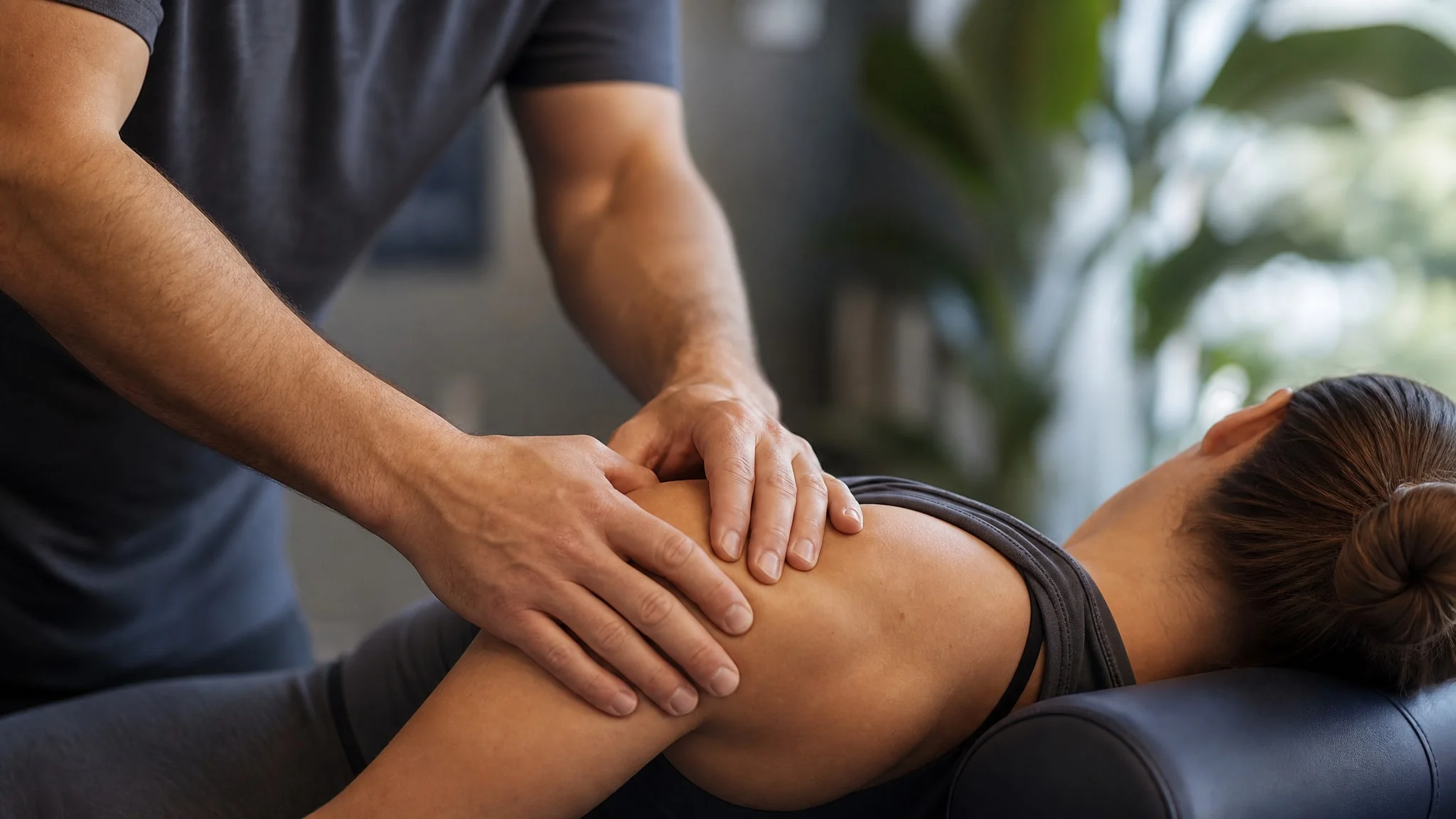
Deep tissue massage uses firm, sustained pressure to work into muscles that have tightened around a curve. It’s especially useful on the side where muscles have shortened and gripped for years, releasing that chronic tightness layer by layer.
Myofascial release takes a gentler, slower approach. Instead of pushing hard into muscle, it works the fascia, the connective tissue that wraps around muscles, which can get restricted and pull unevenly when a curve has been around a long time. This technique tends to work better on the overstretched side, where firm pressure could aggravate already-strained tissue.
Trigger point work targets specific knots that tend to form in predictable spots along a curve, especially near the shoulder blades and lower back. A therapist familiar with scoliosis usually knows where to look first, because the pattern repeats from client to client with similar curve types.
For a broader comparison of technique, how deep tissue compares to cupping is worth a look if you’re deciding which modality suits your pain pattern best.
Why a Generic Relaxation Massage Falls Short
A light, even-pressure spa massage feels nice in the moment. But it treats the left and right sides of your back the same way, which is exactly the opposite of what an asymmetrical spine needs.
At Body Ache Escape, intake conversations start with where the pain actually lives, not a generic full-body routine. That matters even more for asymmetrical conditions like scoliosis. It means more time on the tight side, more finesse on the stretched side, and pressure that changes depending on what the tissue is actually doing.
What to Expect During a Scoliosis-Focused Massage Session
A session built around scoliosis starts before any hands touch your back. Expect your therapist to ask where your curve is located, whether you’ve had spinal surgery, and where your pain tends to concentrate.
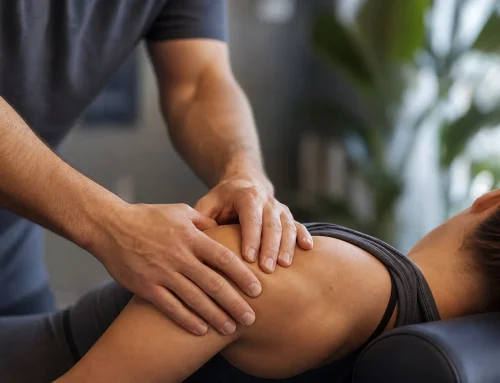
Someone with a thoracic curve often carries tight, overworked muscles on one side of the mid-back and looser, understretched muscles on the other. A good therapist can feel that pattern within minutes of hands-on work, and it shapes the entire session.
Positioning matters more here than in a typical massage. Your therapist may use extra bolstering under your hips, ribs, or shoulder to keep your spine supported in a neutral position. Side-lying positions are common too, especially if lying flat on your stomach or back feels uncomfortable with your particular curve.
As for results, one session usually eases the tightest areas, but lasting change in muscle tension takes a few sessions to build. If you’re new to massage in general, what to expect at your first massage appointment covers the basics of intake and session flow.
Building a Long-Term Relief Plan: Massage Plus Other Support
Scoliosis-related muscle pain responds best to a combination approach, not a single fix. Massage handles the soft-tissue side. Physical therapy and targeted stretching handle strength and mobility. Together, they tend to outperform either one alone.
Stretching routines that lengthen the tight, concave-side muscles while gently strengthening the stretched, convex-side muscles can stretch the benefits of a massage session well past the day you leave the table.
Pairing Massage with Infrared Sauna or Stretching Routines
Heat therapy before or after massage can loosen chronically tight muscle before you even start working it. Pairing massage with infrared sauna for muscle pain is a combination many clients find useful for easing into deeper work without as much discomfort.
If you’re also dealing with broader back pain beyond the scoliosis-specific tightness, it’s worth looking at chronic back pain relief options in Columbus to round out a full plan.
Cost is often a real concern with ongoing care. Body Ache Escape accepts HSA/FSA for eligible treatments, so ongoing scoliosis-related massage care can often fit into a client’s existing wellness budget instead of becoming an occasional splurge.
How often should you go? Most people managing scoliosis-related pain do well with a session every two to four weeks, though that frequency should flex with how your pain behaves and what your physician or physical therapist recommends alongside massage.
Finding the Right Massage Therapist for Scoliosis Near Pickerington
Not every licensed massage therapist has hands-on experience with scoliosis. Before booking, ask a few direct questions. Have they worked with scoliosis clients before? Do they understand the difference between concave-side and convex-side tension? Are they comfortable adjusting positioning and pressure based on curve type?
A therapist who asks detailed intake questions before starting is usually a good sign. One who jumps straight into a standard routine without asking about your curve or surgical history is a sign to look elsewhere.
Adults with scoliosis often carry decades of compensatory tightness. Teens may be dealing with a more recently diagnosed curve and different pain patterns. Either way, a skilled therapist adjusts technique to the person in front of them, not a one-size-fits-all script.
Body Ache Escape serves clients across Columbus, Pickerington, Reynoldsburg, and Canal Winchester, Ohio. Its therapists take the time to understand curve location and pain history before any bodywork begins. For nearby options, therapeutic massage options in Canal Winchester and Pickerington covers what’s available close to home. You can also read more about the Pickerington wellness center approach to pain relief for a fuller picture of how care is structured locally.
If scoliosis pain has been part of your daily routine for too long, a personalized assessment is a good next step. Book a session at Body Ache Escape in Pickerington, and talk through your specific curve, history, and pain points with someone who will actually build a plan around them, not a generic massage that treats both sides of your back the same.