You scroll through a spa website, and every service sounds appealing. Swedish, deep tissue, hot stone, sports massage, prenatal massage. Which one do you pick? That question, “which massage should I get?”, is actually the wrong place to start.
Why “Which Massage Should I Get?” Is the Wrong First Question
Picking a massage type off a menu treats every body the same. A runner with tight calves and a new parent with a stiff neck from feeding their baby don’t need the same session. Both might call their problem “tightness.” They’re not the same problem.
Choosing the right massage technique starts with your symptoms, not with a list of modality names. The real question isn’t “which massage sounds nice?” It’s “what is actually going on in my body, and which technique addresses that cause?”
The problem with treating massage like a spa menu
Spa menus are built to sell relaxation. That’s fine if relaxation is genuinely what you need. But if you’re dealing with chronic pain, a sports injury, or recovery from surgery, picking based on a menu description is basically guessing.
At Body Ache Escape, every first visit starts with a conversation about your pain points, activity level, and health history before a single technique is chosen. It’s a diagnostic step, not a menu order. Match your symptom to the technique, not the other way around.
Types of Massage Therapy Explained: The Core Modalities
Before we get into the decision framework, it helps to understand what each core modality actually does. These are plain-language definitions, tied to the problem each one solves.
Swedish massage: relaxation and circulation
Swedish massage uses long, gliding strokes and light-to-medium pressure. It relaxes the nervous system, improves circulation, and eases general muscle tension. It’s the technique most people picture when they imagine massage.
Swedish massage works well when your main problem is stress, poor sleep, or the kind of everyday tightness that builds up from sitting at a desk all week. It’s not designed to break up deep knots or old scar tissue.
Deep tissue massage: chronic tension and scar tissue
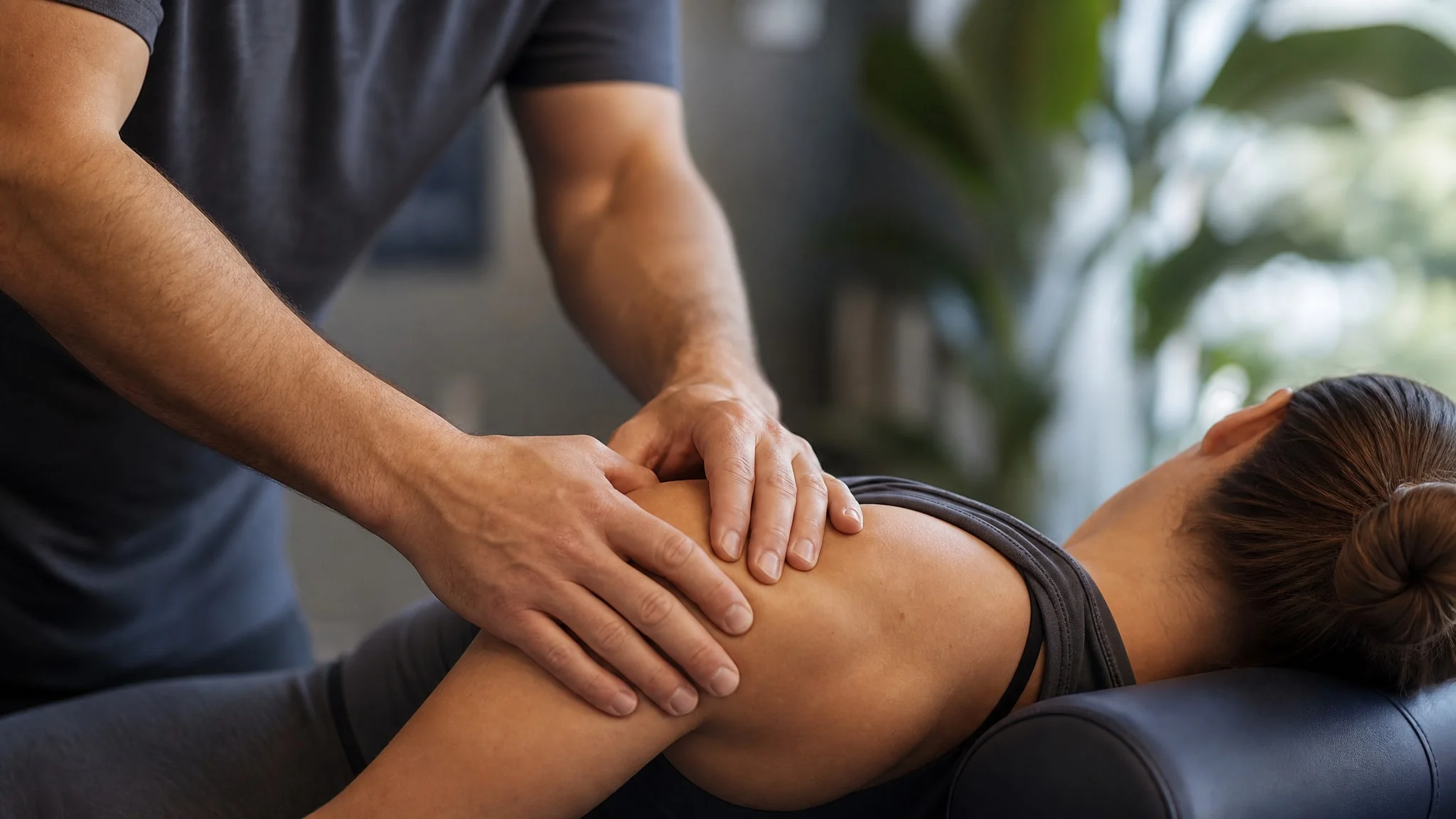
Deep tissue massage uses slower strokes and firmer, more targeted pressure. The therapist works into deeper layers of muscle and connective tissue, often focused on a specific area rather than the whole body.
This technique is built for chronic tension, muscle adhesions, and old injuries where scar tissue has built up over time. It can feel more intense than Swedish massage, and mild soreness afterward is common. That’s why the difference between deep tissue vs Swedish massage matters before you book. One is meant to be relaxing. The other is meant to change something structural in the tissue.
Trigger point and sports massage: targeted and performance-focused
Trigger point therapy zeroes in on specific “knots” in the muscle that refer pain to other areas. A tight spot in the shoulder can cause headaches, for example. Sports massage blends deep work with stretching and is timed around training, competition, or recovery.
Both are targeted rather than full-body relaxation techniques. They’re built for people managing a specific physical demand, whether that’s an athletic training schedule or a recurring pain pattern tied to one muscle group.
Match Your Symptom to a Technique: A Decision-First Framework
This is where choosing the right massage technique actually gets useful. Instead of picking a service, walk through your symptom cluster and let that point you to the modality.
Chronic tension or stiffness
If you’ve had the same tight spot in your neck, shoulders, or lower back for months, that’s chronic tension. It usually calls for deep tissue work rather than a light relaxation session. Chronic tension often has layers, meaning the muscle has been guarding or compensating for a long time. A single light massage won’t touch that.
A therapist will often combine deep tissue technique with trigger point work on the specific areas that stay tight. If your chronic pain is centered in your back, a deeper guide to massage for chronic back pain covers how that combination plays out session to session.
Stress and mental overload vs. muscle pain
Here’s a distinction people miss: stress and muscle pain are not the same complaint, even though they can feel similar in the body. Massage for stress vs muscle pain calls for genuinely different approaches.
If your main issue is a racing mind, poor sleep, or feeling wound up, Swedish massage’s slower pace and lighter pressure calm the nervous system directly. If your main issue is a specific muscle that hurts when you move a certain way, that’s a mechanical problem. It needs targeted pressure, not just relaxation. A good therapist will ask which one is driving your visit, because the session should look different depending on the answer.
Sports injury or overuse strain
Overuse injuries, like shin splints, tennis elbow, or a tight IT band from training, need massage techniques for injury recovery that account for the specific stress placed on that tissue. This usually means a blend of sports massage and deep tissue work, plus attention to whether you’re in-season, recovering, or ramping training back up.
A runner training through shin splints needs a very different session than someone whose neck tension comes from ten hours a day at a desk. Both might describe their problem as “tightness.” The root cause and the right technique are completely different. For anyone training regularly, massage therapy built for runners and finding a sports massage session near you are worth a look before your next session.
Readers curious about how other targeted techniques fit into recovery work can also look at how cupping compares to deep tissue work, or book a cupping or massage therapy session directly if that combination sounds right for your recovery.
Post-injury or post-surgical recovery
This is where the line between therapeutic massage vs relaxation massage matters most. If you’re recovering from a herniated disc, scoliosis, or surgery, a standard deep tissue protocol can actually be the wrong choice. These conditions need techniques adapted around the specific diagnosis, positioning, and pressure limits your body can handle right now.
That’s why intake questions about medical history change the plan entirely at Body Ache Escape. Someone with a herniated disc needs a session built around that diagnosis, not a generic deep-tissue appointment. If that’s your situation, safe techniques for a herniated disc walks through what a modified session looks like.
Prenatal Massage: A Special Case With Its Own Rules
Pregnancy changes almost everything about how a massage should be structured. Prenatal massage deserves its own category rather than being lumped in with general relaxation work.
Prenatal massage benefits go beyond comfort. It can ease lower back pain, reduce swelling in the legs and feet, and help with the hip and pelvic tension that builds as pregnancy progresses. But the technique, positioning, and pressure all need to be adjusted for pregnancy.
When it’s safe to start and what to expect
Pregnant clients are generally advised to wait until after the first trimester before starting prenatal massage. Therapists typically position sessions side-lying with supportive bolsters, protecting both parent and baby throughout.
Pressure is usually lighter than a standard deep tissue session, and therapists avoid certain areas and techniques altogether during pregnancy. If you’re planning ahead even earlier, massage while trying to conceive covers what’s appropriate before pregnancy begins.
What to Expect at Your First Massage Appointment
If you’re still unsure which category fits you, that’s fine. That’s actually the whole point of this framework: you shouldn’t have to self-diagnose.
At your first visit, expect a conversation before any hands-on work begins. A licensed therapist will ask about your pain points, your activity level, past injuries, surgeries, and what you’re hoping to get out of the session. That intake shapes the entire plan.
Founders Michele and Kyron built the center in 2010 around a results-driven, clinician-minded approach rather than a spa-ambiance model. That’s why technique selection here is clinical decision-making, not a checkbox on an intake form. It’s also why we build a personalized massage treatment plan instead of asking you to pick a service off a list and hope it’s the right one.
If you live in or around Columbus, Pickerington, Reynoldsburg, or Canal Winchester and you’ve been guessing at which massage type might help, you don’t have to keep guessing. Our Pickerington wellness center offers a first visit built around your specific pain, injury, or life stage. Bring your symptoms, not a service name, and let a licensed therapist build the plan from there.